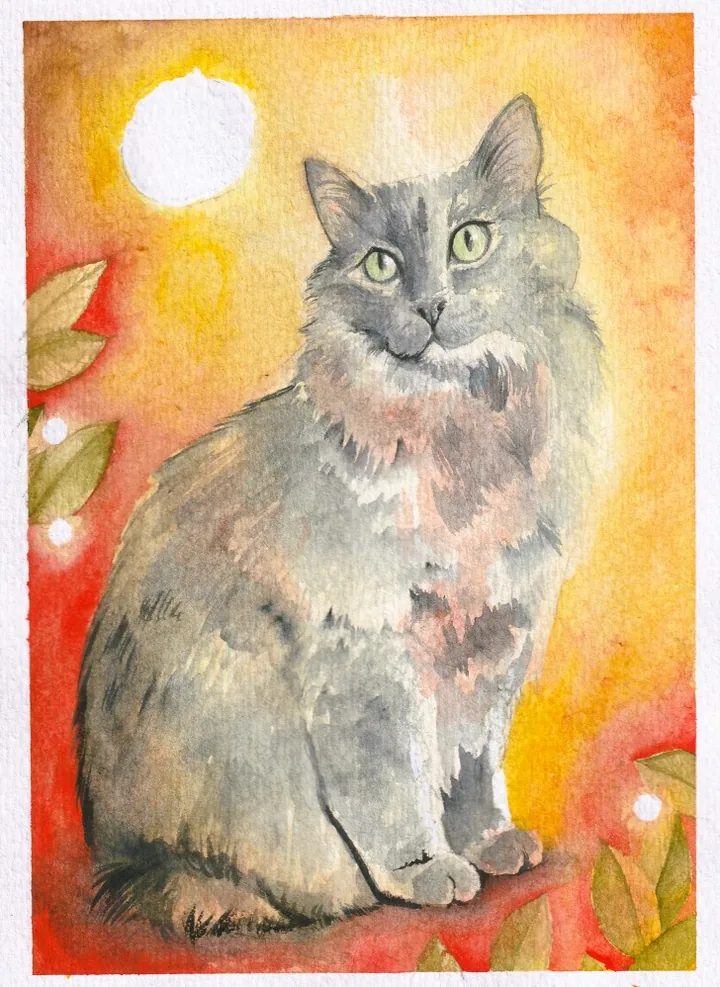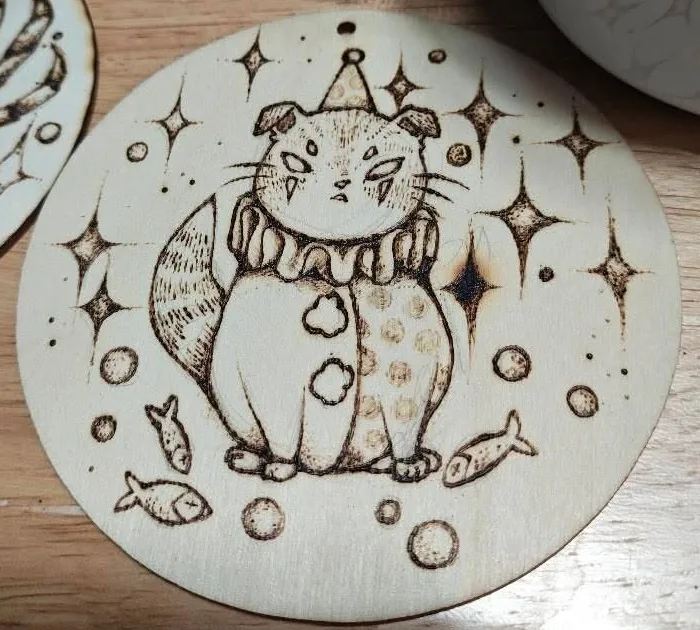
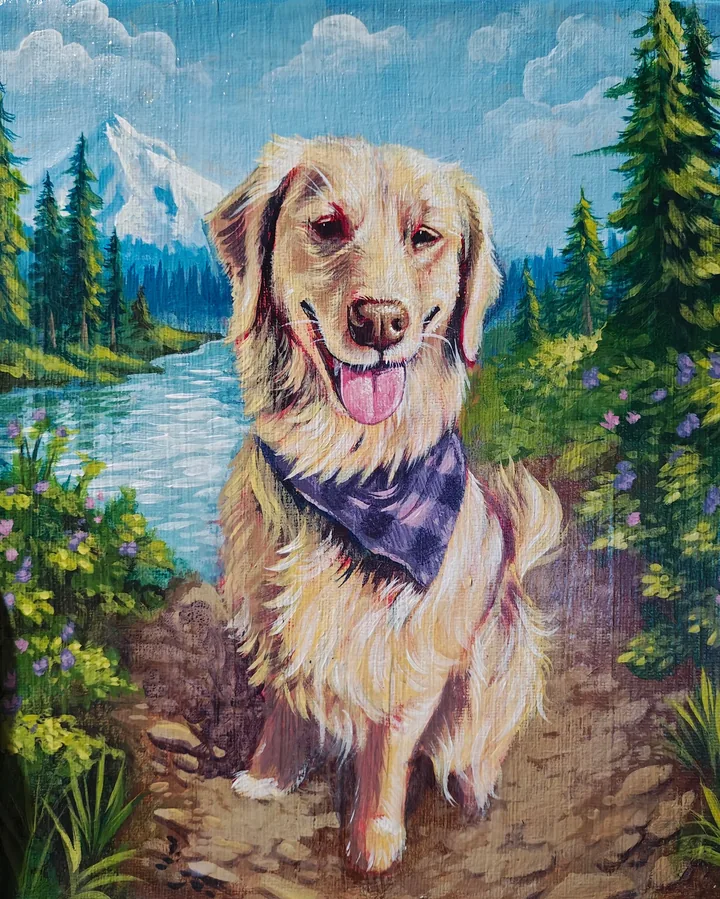
A golden retriever painted in acrylic. The bandana, markings and setting are details worth discussing with your artist.
Start with the face you recognize
A portrait begins with a photograph, but the choice is personal. The best starting point is often the picture that feels most like your animal: an alert tilt of the head, a sleepy expression or the way they look up when you call their name. Choose an expression you would enjoy seeing in a painting, rather than choosing only the most polished photograph.
Sara paints from reference photos. Her own advice is to send images with good lighting, high resolution and color. Before ordering, consider which features make your pet recognizable and whether the photo shows them clearly.
Look for light and detail
Daylight can make fur color and markings easier to see. Look for a photo where the eyes, nose and outline of the face are clear. Strong shadows, colored indoor lights and heavy filters can obscure the details an artist needs. You do not need a professional camera; a clear phone photograph can be a useful reference.
Send the original file if you have it. A small social media screenshot or a tightly cropped thumbnail may lose information around the ears, whiskers or paws. Keep an uncropped version so Sara can discuss the composition with you.
Send context, not just more pictures
If you have several good photos, identify your preferred pose and use the others to explain markings or color. Say whether a collar, bandana, favorite toy or particular background matters. A short note about the animal's personality can be more helpful than a folder of near-identical images with no explanation.
For two animals, ask about the chosen format before buying. Some of Sara's sizes are for one pet, while others allow two. The current portrait options explain these differences; an extra subject is not automatically included in every size.
When the photographs are imperfect
Not every meaningful photograph is technically perfect. If you are commissioning a portrait of a pet you have lost, you may have only older or blurry images. Sara's FAQ says she can work from grainy or blurry references, although they make the work harder. Send what you have and ask what is possible before choosing a product.
Finally, discuss the size and medium as well as the photo. A tiny watercolor and a larger acrylic canvas give different amounts of space for a full body, multiple pets or a detailed setting. Matching the reference and the format helps you choose a portrait with a clear purpose.
Ready for a closer look?
Explore pet portrait commissions